Journal / artificial dyes
Electrolytes Without Artificial Dyes (2026): Which Brands Use Natural Colors Instead
Plenty of electrolyte drinks still get their color from petroleum based synthetic dyes like Red 40 and Blue 1. Plenty of others switched to beet juice, turmeric, and fruit extracts years ago, and a few skip color entirely. The label tells you which one you are holding, and this guide shows you exactly what to look for, with verified label entries for the major brands and the regulatory deadlines that are about to change the category.
The Quick Answer: Who Uses What
We pulled these ingredient entries from USDA FoodData Central and brand listings, verbatim, so you can check them yourself. Formulas change, so always confirm against the pouch or bottle in your hand.
| Product | What the label lists for color | Type |
|---|---|---|
| Gatorade Thirst Quencher, Fruit Punch | Red 40, caramel color | Synthetic dye |
| Gatorade Thirst Quencher, Glacier Freeze | Blue 1 | Synthetic dye |
| Powerade Mountain Berry Blast (powder) | Lake Blue 1 | Synthetic dye |
| Pedialyte Grape | Red 40, Blue 1 | Synthetic dyes |
| MiO Fit Lemon Lime | Yellow 5, Blue 1 | Synthetic dyes |
| PepsiCo's caffeinated Glacier Freeze energy drink | Black carrot juice concentrate, blueberry juice concentrate | Natural color |
| BodyArmor Lyte Strawberry Lemonade | Vegetable juice concentrate (color) | Natural color |
| Ultima Replenisher Grape | Grape skin extract (color) | Natural color |
| Pedialyte Unflavored | None | No colorant |
| LMNT Raw Unflavored | None | No colorant |
| GREEN Organic Hydration (both mixes) | None. Color comes from the food itself | No colorant |
Two details worth noticing. First, the same flavor name can sit on both sides of the line: classic Glacier Freeze Thirst Quencher lists Blue 1, while PepsiCo's newer caffeinated Glacier Freeze energy drink gets its color from black carrot and blueberry juice concentrates. Second, Pedialyte sells both: the standard Grape bottle lists Red 40 and Blue 1, and the company also offers a separate dye free line.
Why Dyes Are in Sports Drinks at All
Artificial color does nothing for hydration. Sodium, potassium, glucose, and water do the work. FD&C dyes are there so the liquid matches the flavor name on the front: red for fruit punch, blue for anything called glacier or arctic. They are cosmetic ingredients in a product people drink for function.
That is also why they are easy to avoid. Removing a dye changes how a drink looks, not how it performs. Several brands have already reformulated or launched natural color versions, which is why the natural color column above keeps growing.
The Regulatory Clock Is Already Running
This is the part most roundups skip, and it matters if you are deciding whether dyes are worth avoiding. Three dates, all from primary sources:
- January 15, 2025: the FDA revoked authorization for FD&C Red No. 3 in food under the Delaney Clause, after studies showed cancer in male lab rats at high doses. Food makers have until January 15, 2027 to reformulate.
- April 22, 2025: HHS and the FDA announced a plan to phase out all petroleum based synthetic dyes from the US food supply, naming FD&C Green No. 3, Red No. 40, Yellow No. 5, Yellow No. 6, Blue No. 1, and Blue No. 2 for elimination by the end of 2026. The agency is working with industry rather than issuing an immediate ban, so the dyes remain legal today.
- December 31, 2027: California's School Food Safety Act (AB 2316, signed September 2024) takes effect, barring public schools from serving food or drinks containing those same six dyes.
On the health question, the balanced summary is this: the FDA maintains that most children experience no adverse effects from approved dyes. California's Office of Environmental Health Hazard Assessment reached a different conclusion in its 2021 assessment, finding that synthetic food dyes can cause hyperactivity and other neurobehavioral problems in some children and that sensitivity varies widely from child to child. You do not need to settle that debate to act on it. If the ingredient is cosmetic and under regulatory pressure, choosing products without it costs you nothing.
How to Read the Label in Ten Seconds
Synthetic dyes are among the easiest ingredients to spot because US rules require them to be named individually:
- Scan the end of the ingredient list. Dyes are used in tiny amounts, so names like Red 40, Yellow 5, and Blue 1 almost always sit in the last few positions.
- The word Lake (as in Lake Blue 1) is still a synthetic dye, just bound to a carrier so it will not dissolve or bleed in a dry powder.
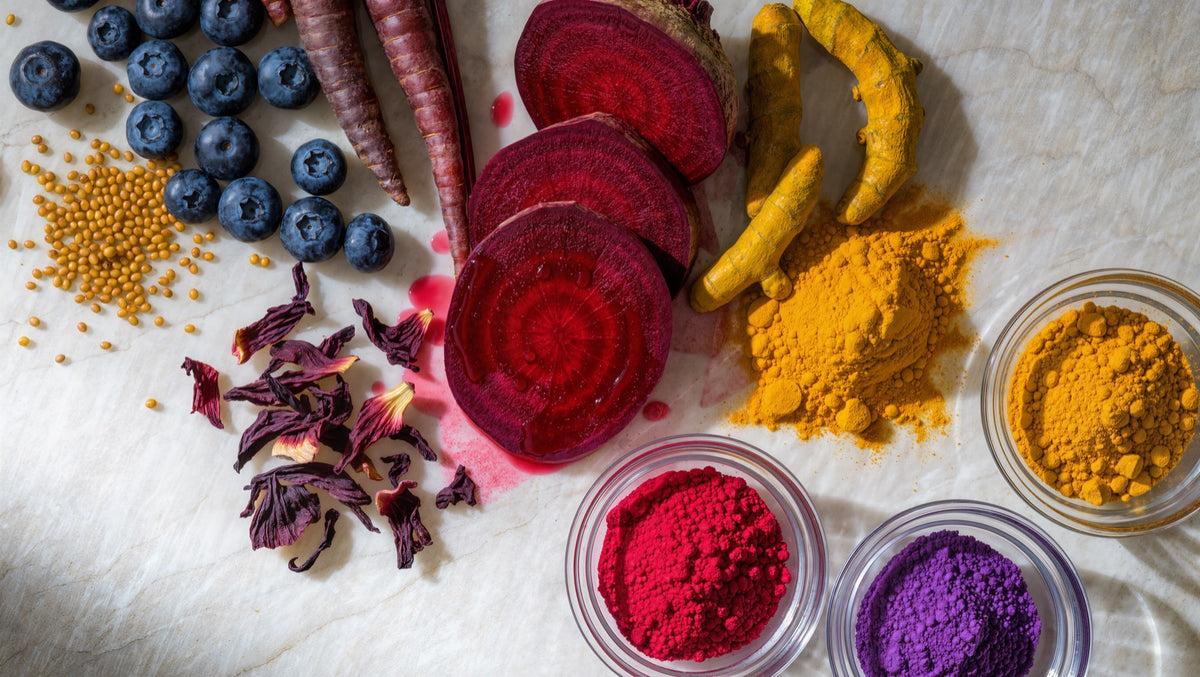
- Natural colors usually announce themselves with a parenthetical: beet juice (color), grape skin extract (color), turmeric (color), annatto, beta carotene, or a fruit and vegetable juice blend.
- A white or beige powder often has no colorant at all. Unflavored products like LMNT Raw and Pedialyte Unflavored list none.
One shortcut does a lot of this work for you: the USDA Organic seal. Synthetic dyes are not on the National List of substances allowed in organic products (7 CFR 205.605), so a certified organic drink mix cannot contain FD&C colors. The certification is audited annually, which makes it a checkable claim rather than a marketing phrase. We covered that standard in detail in our cleanest electrolyte powder guide.
Where GREEN Fits
Disclosure: this is us, so weigh this section accordingly.
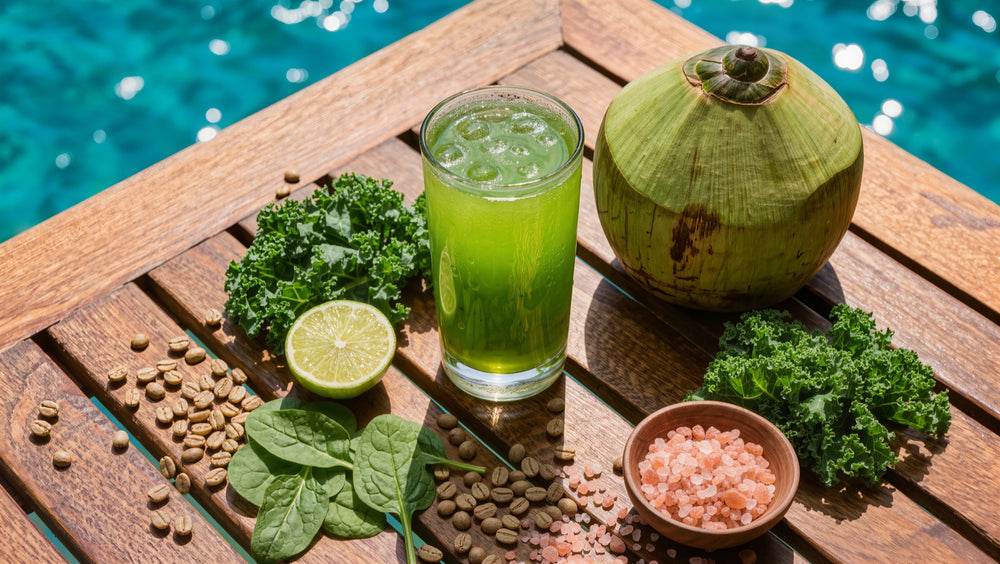
GREEN is USDA Certified Organic, which means synthetic dyes were never an option. But the more specific answer to "what do you use for color instead" is: nothing. There is no colorant of any kind on either label. The Hot Mix is brown because its first ingredient is organic cacao. The Cold Mix is golden because it contains organic turmeric, a food that happens to be one of the most common natural colorants in the industry, except here it is simply an ingredient.
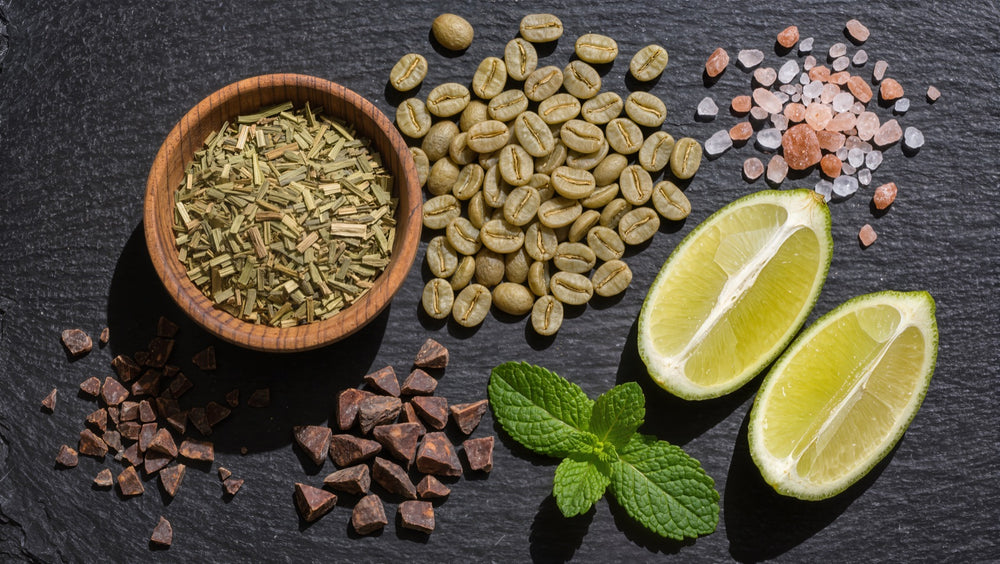
Here is the full Hot Mix label, nothing left out: Organic Cacao, Pressed Organic Cane Juice, Organic Coconut Water, Pink Himalayan Sea Salt, Organic Flavors, Organic Rice Fiber, Organic Green Coffee Bean Extract (180mg caffeine), Organic Stevia Leaf Extract. Per serving: 45 calories, 410mg sodium, 70mg potassium, and 9g of organic cane sugar that drives sodium glucose absorption, the mechanism behind Oral Rehydration Therapy. The Cold Mix runs the same way: Pressed Organic Cane Juice, Organic Coconut Water, Pink Himalayan Sea Salt, Organic Flavors, Citric Acid, Organic Rice Fiber, Organic Green Coffee Bean Extract, Organic Stevia Leaf Extract, Organic Turmeric.
It is a drink built to replace coffee with clean energy and full body hydration: 180mg of caffeine from green coffee bean, electrolytes based on the science of Oral Rehydration Therapy, and a label where every ingredient is a recognizable food. If your filter is "no artificial dyes," GREEN clears it by never having had anything to remove.
Try the Hot Mix or the Cold Mix and check the pouch yourself.
The Bottom Line
Artificial dyes in electrolyte drinks are cosmetic, easy to identify, and on their way out of the US food supply. Red 40, Yellow 5, Yellow 6, Blue 1, Blue 2, and Green 3 face a federal phase out target of end of 2026, and Red 3 is already revoked. If you want to get ahead of that curve today: scan the last few ingredients for FD&C names, treat Lake colors as the same thing, and favor drinks that either use food based colors or skip colorants entirely. The USDA Organic seal rules out synthetic dyes automatically.
If you are also filtering for other additives, we keep the same verbatim label standard in our guides to electrolytes without natural flavors, electrolytes without artificial sweeteners, and silicon dioxide in electrolyte powder.
Sources: FDA Red No. 3 revocation, HHS/FDA synthetic dye phase out announcement, California AB 2316, OEHHA health effects assessment, 7 CFR 205.605, USDA FoodData Central.
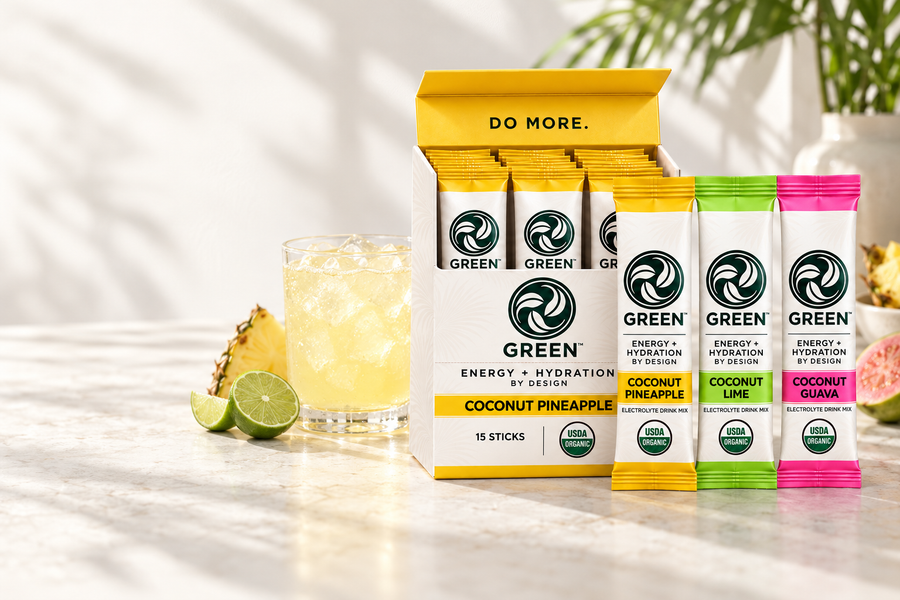
Cold Mix
Three fruit flavors. USDA Certified Organic energy + hydration. Coming soon.
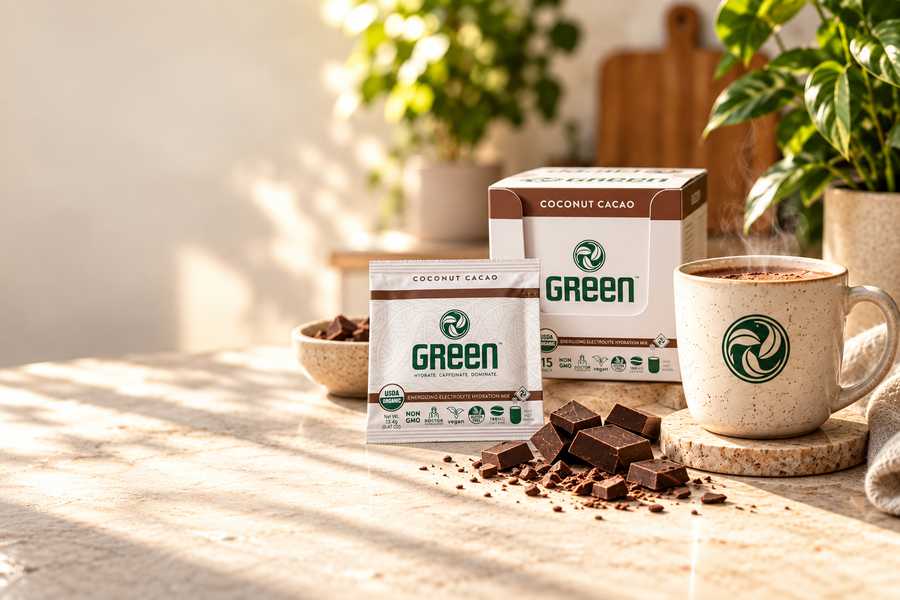
Hot Coconut Cacao
USDA Certified Organic. Ceremonial cacao, organic caffeine and hydration in one warm ritual.